Consumer democracy in the age of social networks and AI


In traditional political theory, democracy is exercised through the ballot box. Yet in contemporary societies, another form of influence has quietly gained momentum: Consumer democracy. Every purchase, boycott, review, and viral post has become a micro-vote shaping corporate behavior, public discourse, and even regulatory agendas. In the digital era – amplified by social networks and artificial intelligence – this form of democracy has evolved from diffuse individual choices to a coordinated, data-driven force.
From purchasing power to collective voice
Consumer democracy rests on a simple premise: Markets respond to demand. Historically, this meant that consumers could reward or punish companies through their purchasing decisions. However, this mechanism was slow and often invisible. A dissatisfied customer might quietly switch brands, but the broader impact remained opaque.
The rise of social networks fundamentally altered this dynamic. Platforms like Twitter (X), Instagram, TikTok, and Reddit transformed isolated experiences into collective narratives. A single complaint can now cascade into global attention within hours, turning private dissatisfaction into public pressure.
A well-known example of this is the United Airlines incident (2017), where a passenger was forcibly removed from an overbooked flight. A video captured by a fellow passenger went viral, sparking global outrage. Within days, United's stock value dropped significantly, and the company issued policy changes. Here, consumer democracy operated through visibility and collective reaction.
Boycotts, “buycotts,” and the new activism
Modern consumer democracy is not limited to negative reactions. It also includes proactive support – sometimes called “buycotts” – where consumers intentionally support brands aligned with their values.
Consider the case of Patagonia, which has built its identity around environmental activism. When the company sued the U.S. government over public land protections, it did not face backlash; instead, it saw increased loyalty and sales from environmentally conscious consumers. Here, consumer democracy reinforced corporate behavior aligned with societal values.
Conversely, brands perceived as unethical can face swift backlash. The H&M controversy (2018) involving a racially insensitive advertisement led to widespread boycotts, store closures in some regions, and a rapid corporate apology. Social networks acted as accelerators, transforming a localized issue into a global reputational crisis.
The algorithmic amplifier
Artificial intelligence has added a new layer to consumer democracy by shaping what people see, how they interpret it, and how quickly information spreads.
Recommendation algorithms determine which posts go viral, which reviews gain visibility, and which narratives dominate. This creates a feedback loop: Emotionally charged content – especially outrage – tends to be amplified because it drives engagement. As a result, consumer reactions can become more intense and more polarized.
For instance, TikTok-driven product trends can propel unknown brands into global success overnight. The sudden popularity of products, like the “Stanley Cup” tumbler or specific skincare brands, demonstrates how algorithmic exposure can translate directly into market outcomes. In these cases, AI doesn't just reflect consumer preferences – it actively shapes them.
At the same time, AI-powered sentiment analysis is increasingly used by companies to monitor public opinion in real time. Brands can detect emerging controversies, track consumer mood, and respond faster than ever before. This creates a paradox: While consumers gain power, corporations also become more adept at managing and sometimes deterring that power.
The role of reviews and reputation systems
Platforms like Amazon, Google Reviews, and TripAdvisor have institutionalized consumer democracy through rating systems. A product's success can hinge on aggregated user feedback, effectively turning consumers into co-regulators of quality.
However, AI has complicated this ecosystem. Fake reviews – sometimes generated or amplified by automated systems – can distort perceptions. In response, platforms increasingly rely on machine learning to detect fraudulent behavior. Thus, AI simultaneously threatens and safeguards the integrity of consumer democracy.
Opportunities and risks
The convergence of social networks and AI has undeniably strengthened consumer influence. Companies are more accountable, more transparent, and more responsive than in previous decades. Issues such as sustainability, diversity, and labor practices are now central to brand identity, largely due to consumer pressure.
Yet this new democracy is not without flaws. Viral outrage can lead to disproportionate consequences, sometimes based on partial information, and coordinated campaigns – by activists, competitors, or even states – can artificially shape consumer sentiment.
There's also an algorithmic bias, meaning that what becomes “visible” is not always the most important, but the most engaging.
Toward a more conscious consumer democracy
The future of consumer democracy will depend on how both individuals and institutions navigate these challenges. Consumers must develop critical awareness of how information is curated and amplified. Platforms must balance engagement with responsibility. Companies must move beyond reactive crisis management and toward genuine accountability.
Artificial intelligence, if used ethically, could enhance this system by improving transparency – highlighting trustworthy information, detecting manipulation, and enabling more informed choices.
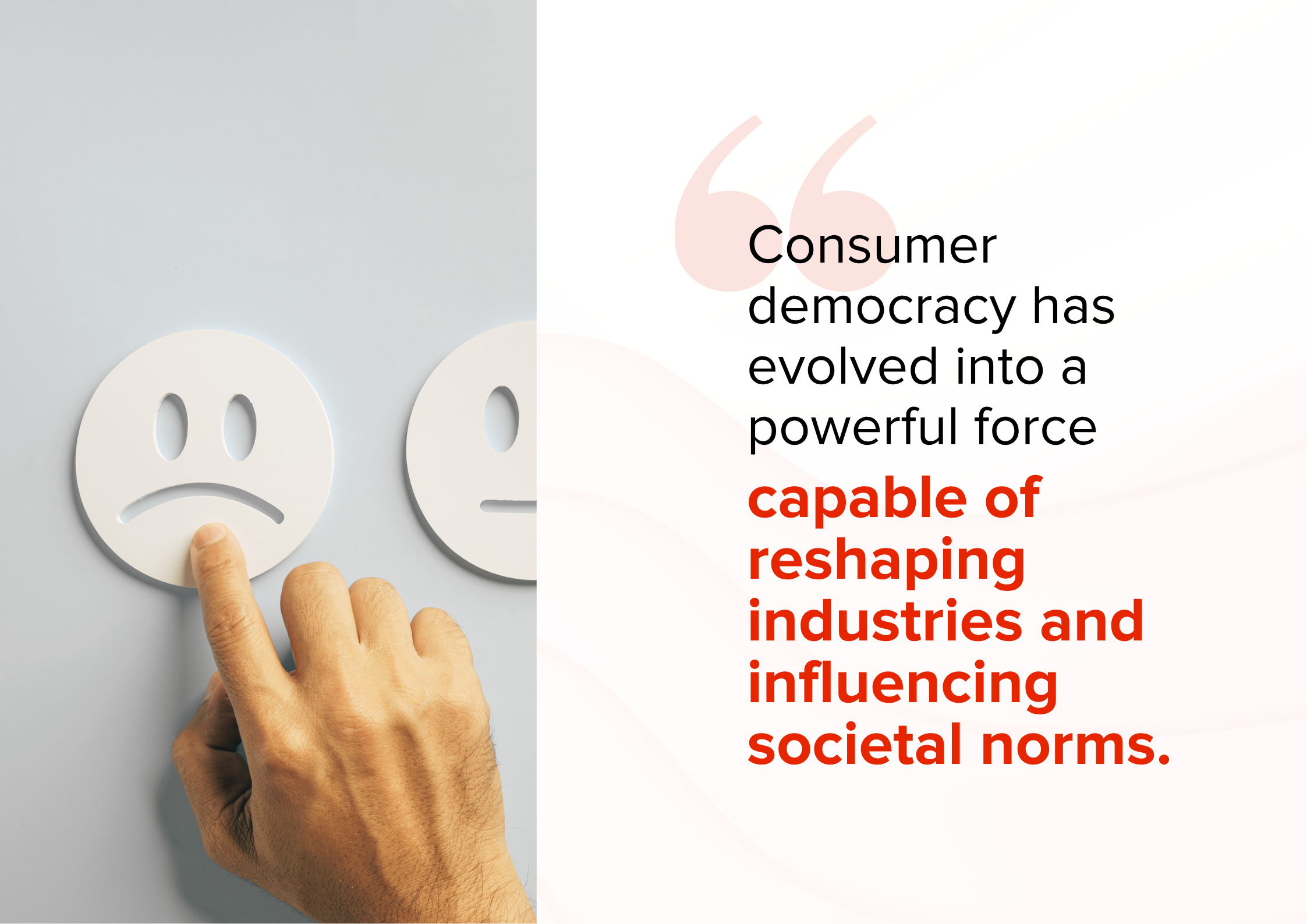
Consumer democracy has evolved from a quiet, market-based mechanism into a powerful, networked force capable of reshaping industries and influencing societal norms. Social networks have given consumers a voice and AI has given that voice reach and speed.
But with great power comes complexity. The challenge ahead is not simply to exercise consumer influence, but to ensure it remains informed, fair, and constructive. In this sense, consumer democracy is not just about what we buy – it is about how we participate in shaping the world through our collective choices.
