Packaging innovation: The hidden engine of revenue growth management in FMCG
In the fast-moving consumer goods (FMCG) industry, growth rarely comes from a single blockbuster innovation anymore. Markets are saturated, consumers are fragmented, and competition is relentless. In this environment, companies are discovering that one of the most powerful – and underestimated – levers for profitable growth is not necessarily the product itself, but the packaging.
Packaging innovation has evolved far beyond aesthetics or shelf visibility. Today, it sits at the intersection of pricing strategy, consumer psychology, sustainability, channel management, and profitability. For revenue growth management (RGM) teams, packaging is no longer a support function. It is a strategic growth driver.
The new role of packaging in FMCG
Traditionally, packaging served three main purposes: Protection, transportation, and communication. But modern FMCG companies now view packaging as a commercial asset capable of shaping consumer behavior and unlocking incremental revenue.
A change in pack size, format, material, or usability can dramatically influence purchasing decisions. Consumers may perceive greater value, improved convenience, or stronger premium credentials – even when the core product remains unchanged.
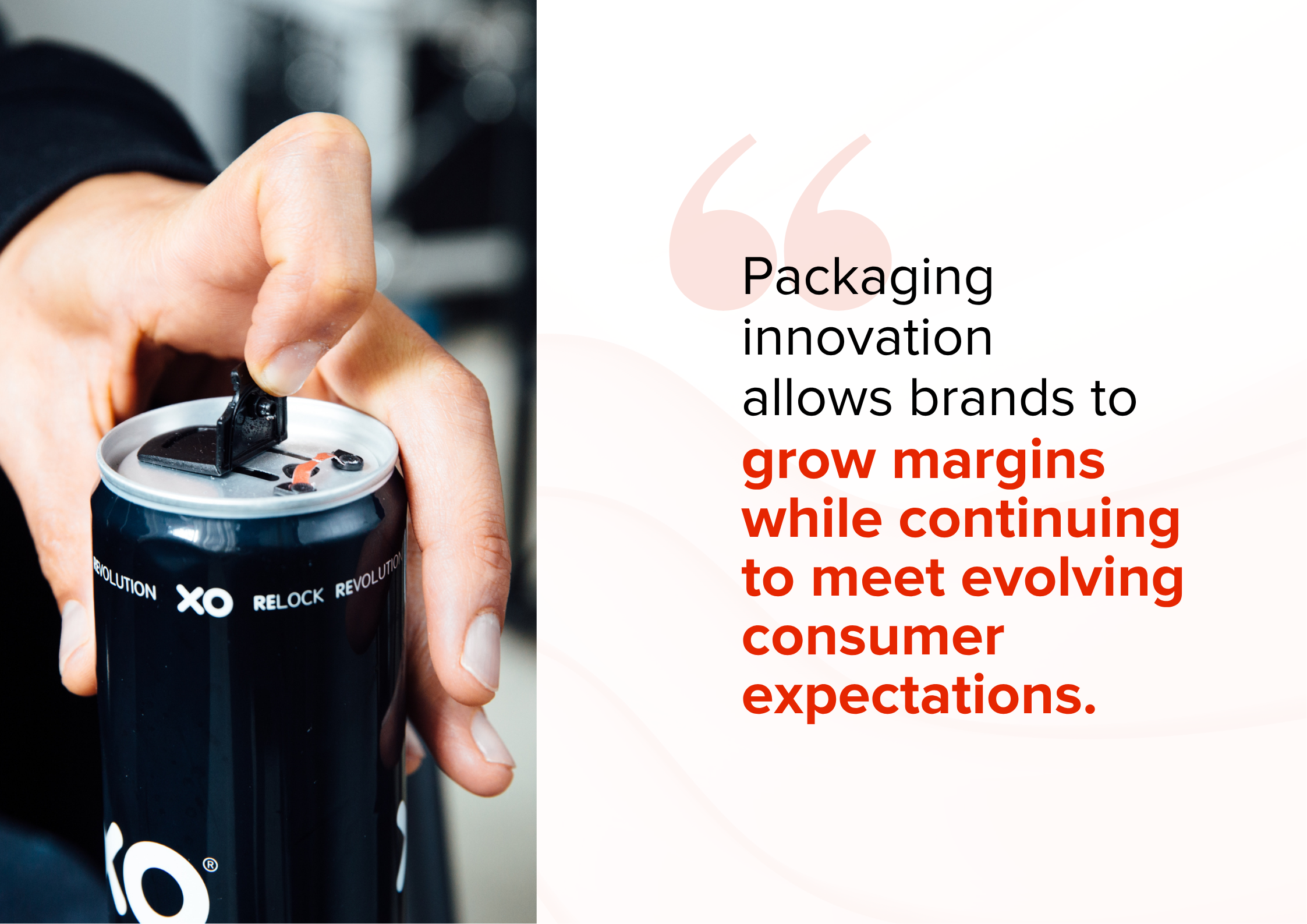
This is particularly important in FMCG, where margins are constantly under pressure from inflation, retailer negotiations, and rising operational costs. Packaging innovation allows brands to defend/grow margins while continuing to meet evolving consumer expectations.
In many cases, packaging becomes the innovation.
Revenue growth management: More than pricing
RGM is often misunderstood as a pricing discipline alone. In reality, it is about optimizing every commercial lever to maximize profitable growth. This includes assortment, promotion, trade investment, pricing architecture, and, critically, pack-price strategy.
Packaging plays a central role because it directly influences price perception, purchase frequency, channel suitability, consumer segmentation, margin structure (volume vs. value), and promotional effectiveness; not only price promotions, but event-/ season-specific promotions as well (e.g., World Cup, holiday season, etc.).
The most successful FMCG companies understand that consumers do not buy “price per kilogram.” They buy affordability, convenience, occasion relevance, and emotional value.
Packaging innovation enables companies to tailor those perceptions with remarkable precision.
Smaller packs, bigger opportunities
One of the clearest examples of packaging-led RGM is the rise of smaller, more affordable formats.
In emerging markets, sachets and mini-packs have transformed entire categories. Shampoo, coffee, detergent, and snacks became accessible to millions of consumers through low entry-price packaging. But even in mature markets, smaller packs are increasingly relevant. FMCG companies are able to target “portion control” or “responsible drinking” with smaller packs.
As inflation affects household budgets, consumers seek lower out-of-pocket spending. A smaller cereal box or beverage format may carry a higher unit price yet still feel more affordable at the shelf. This allows brands to shield/increase margins while maintaining consumer accessibility.
For RGM teams, this is a critical balancing act. They must preserve price perception and maintain brand loyalty while avoiding aggressive discounting and optimizing margin per gram or milliliter (volume/value trade-off). Packaging becomes the tool that makes all four objectives simultaneously possible.
Premiumization through design and experience
At the other end of the spectrum, packaging innovation is a powerful engine for premiumization. Lifestyle & channel positioning allow for unique packaging and premium pricing; for example, aluminum water bottles in top-end Horeca vs. single-serve PET in cash & carry.
Consumers increasingly associate packaging quality with product quality. Texture, shape, sustainability credentials, resealability, ergonomic design, and even sound cues can influence the willingness to pay.
Consider how beverage brands use sleek aluminum cans, embossed glass bottles, or minimalist designs to elevate perceived value. The liquid inside may remain largely unchanged, but the consumer experience feels more premium. This creates substantial pricing power.
Premium packaging allows FMCG brands to command higher price points, increase margins, differentiate themselves from private labels, and expand into new consumption occasions, particularly AFH/on-the-go, currently at the center of many beverage companies’ RGM optimization strategies.
In categories where product differentiation is limited, packaging often becomes the primary driver of value perception.
Sustainability as a growth lever
Sustainability has transformed packaging from a purely cost factor into a strategic brand differentiator.
Consumers increasingly expect recyclable, reusable, or reduced material packaging. Retailers and regulators are also pushing companies toward more sustainable solutions, especially circularity due to the new European PPWR directive (Packaging & Packaging Waste Regulation).
While sustainable packaging can initially increase costs, it also creates long-term commercial advantages. In addition to reduced regulatory risk and the building of stronger retailer partnerships, eco-friendly packaging provides access to environmentally conscious segments – consumers are often willing to pay more for products that align with their values – and can lead to enhanced brand reputation and greater consumer loyalty.
For RGM leaders, sustainability packaging is no longer just a compliance initiative. It is becoming a premiumization and revenue strategy.
Channel-specific packaging strategy
The growth of e-commerce and convenience retail has added another layer of complexity – and opportunity. Different channels require different packaging strategies.
A pack optimized for a hypermarket shelf may perform poorly online. Conversely, packaging designed for e-commerce durability and subscription convenience may create new growth opportunities.
Just as durable, frustration-free packaging can boost e-commerce, bulk formats thrive in wholesale and club channels; portable packs have great success in convenience retail; multi-packs drive family consumption; and single-serve formats support impulse purchases.
The ability to tailor packaging by channel allows FMCG companies to maximize profitability across different retail ecosystems. Retail-ready packaging has done a lot for supply chain optimization, creating cost reduction for retailers, with hard and soft discounters driving this change based on packaging innovation.
This is where packaging innovation becomes deeply connected to sophisticated RGM capability.
Packaging and behavioral economics
Some of the most successful packaging innovations are rooted in behavioral science. Even color psychology affects conversion rates.
Consumers rarely make perfectly rational purchasing decisions. Packaging can be a powerful tool in this regard, as it influences perception in subtle but powerful ways, with taller packs seeming larger, resealable formats implying freshness, transparent windows signaling authenticity, portion-controlled packaging reducing feelings of guilt, and limited-edition designs stirring a sense of urgency.
Packaging innovation thus allows brands to shape emotional and cognitive responses without changing the underlying product formula. For RGM teams, understanding these behavioral triggers is increasingly valuable in driving both volume and margin growth.
The data revolution in packaging decisions
Historically, packaging decisions were driven by intuition and brand design teams. Today, advanced analytics are reshaping the decision-making process. Companies now use shopper data, eye-tracking technology, retail scanner data, AI-powered demand forecasting, price elasticity modeling, and consumer sentiment analysis, all of which allow brands to quantify how packaging modifications influence purchasing behavior and profitability.
The most advanced FMCG companies are integrating packaging decisions directly into revenue management systems, ensuring innovation aligns with measurable commercial outcomes.
The risks of poor packaging strategy
Packaging innovation can drive growth – but poor packaging choices can destroy value just as quickly.
Common mistakes include excessive complexity in the portfolio, unsustainable packaging costs, consumer confusion, retail execution challenges, cannibalization between formats, and over-premiumization during economic downturns.
Successful packaging innovation requires close collaboration across Marketing, Finance, Supply Chain, RGM, and Sales teams. It is both an art and a science.
The future: Smart, connected, and adaptive packaging
The next frontier of packaging innovation is already emerging.
Smart packaging technologies – including QR integration, connected experiences, freshness indicators, and augmented reality – are opening new ways to engage consumers and collect data. Meanwhile, personalization and localized packaging strategies are becoming increasingly feasible thanks to digital printing and flexible manufacturing.
In the future, packaging may become a dynamic media platform rather than a static container.
For FMCG companies, this creates enormous possibilities for monetization, consumer engagement, and revenue optimization.
A very compelling example: Resealable cans by Xolution
One of the most compelling real-world examples of packaging innovation driving RGM is the emergence of resealable can technology developed by companies such as Xolution Germany GmbH.
Traditionally, beverage cans were designed for immediate, single-occasion consumption. Once opened, the product had to be consumed quickly or lose carbonation, freshness, and portability. Xolution’s resealable can innovation fundamentally changes that consumption model and, in doing so, creates entirely new commercial opportunities for FMCG brands.
By introducing resealability in aluminum cans, brands can influence multiple revenue levers simultaneously. Besides improved portability, convenience, and differentiation, resealability offers:
- Increased product value, with greater freshness due to the fact that the CO2 is trapped in the can (especially relevant for energy drinks, often consumed over a long period during the day, compared to an immediate refreshment like CSD).
- Premium pricing strategy support, since the functional benefit is immediately experienced by the consumer.
- Expanded consumption occasions (especially AFH/on-the-go and events).
- Greater safety, since it can protect consumers against “substance abuse” or regulation in the case of “cannabis drinks” (can be considered childproof).
- Differentiate from standard packaging formats and support portion control.
- Strengthened sustainability narratives through aluminum recycling compatibility vs. single-serve PET.
The innovation additionally creates clear channel-specific advantages:
- Convenience retail benefits from portable, spill-resistant formats.
- E-commerce gains from improved transport practicality.
- Events and outdoor consumption occasions become more attractive.
- Premium hospitality channels gain differentiation opportunities.
For RGM teams, innovations like Xolution’s resealable technology open new possibilities in pack-price architecture. Brands can position resealable cans as premium formats, particularly in categories such as energy drinks, functional beverages, ready-to-drink cocktails, sparkling water, premium soft drinks, and wine.
From a behavioral economics perspective, resealable cans address important consumer pain points, as shoppers increasingly seek “on-the-go” convenience without sacrificing product freshness. The ability to close a can after opening reduces waste perception and creates a more flexible consumption experience.
And this seemingly simple packaging enhancement can significantly increase willingness to pay.
Essentially, the product inside the can may remain unchanged yet the packaging innovation alone can justify higher pricing power and improved margin structures.
This is precisely where packaging innovation becomes an RGM growth engine rather than a simple functional upgrade, and illustrates perfectly a broader shift occurring across FMCG: Packaging is no longer merely protecting the product. It is actively reshaping the consumer experience, redefining value perception, and unlocking profitable growth.
Xolution’s resealable can technology demonstrates how even incremental packaging innovations can generate disproportionate commercial impact when aligned with sophisticated RGM strategies. In many ways, it validates a central reality of modern FMCG: Growth increasingly belongs to companies that innovate not only the products consumers buy – but how consumers experience, use, and value the packaging itself.
For RGM leaders, packaging offers a unique ability to influence pricing power, affordability, premiumization, channel performance, sustainability perception, and consumer behavior – often simultaneously.
The companies set to win in the next decade are not simply those with the best products, but those who understand how packaging can transform value perception and proposition into profitable growth. Because in FMCG, what’s on the outside increasingly matters as much as what’s inside.

