What will define business leadership in 2026
Business leadership in 2026 will look markedly different from what many organizations have been used to over the past decade. The environment is less forgiving, less predictable, and far more demanding in terms of tangible results. Growth is harder to come by, margins are under pressure, and execution has become significantly more complex. In this context, leadership will be judged less on ambition and more on what actually gets delivered.
The leaders who stand out will not necessarily be those with the boldest visions, but those who can translate uncertainty into clear direction and fast results.
From perfect plans to timely decisions
One of the most visible shifts will be the way decisions are made. In 2026, waiting for perfect information will increasingly be a liability. Markets move too fast, and opportunities close quickly. Strong leaders will be those who can make informed decisions with incomplete data, adjust quickly, and move on.
This does not mean acting blindly. It means using data, analytics, and AI to shorten decision cycles, reduce unproductive debate, and focus energy where it matters most. Leadership effectiveness will be measured by decision quality combined with speed, not by the sophistication of the analysis behind it.
A harder focus on value
Another defining feature of leadership in 2026 will be a renewed focus on value creation in its most concrete form. Revenue alone will no longer be enough. Margin, cash generation, and return on commercial investments will return to the center of leadership conversations.
Leaders will be expected to make explicit trade-offs ‒ between growth and profitability, price and volume, and investment and return. Topics such as pricing discipline, mix optimization, and route-to-market effectiveness will no longer lie on the fringes of the organization. They will become core leadership responsibilities.
Execution becomes non-negotiable
For many years, execution was often treated as a downstream activity. In 2026, it will be a defining leadership skill.
Effective leaders will stay close to the realities of the field: how customers buy, how channels actually behave, and how incentives shape day-to-day decisions. Strategies that look good on paper but cannot be executed quickly will lose credibility. Success will be measured by what changes in the market, not by what gets approved internally.
AI as tool, not distraction
By 2026, AI will be widely available. What will differentiate leaders is not whether they talk about it, but whether they use it intelligently.
The most effective leaders will understand where AI genuinely improves decision-making ‒ pricing, forecasting, demand planning, resource allocation ‒ and where human judgment remains essential. They will be AI-literate without being technology-obsessed, focused on impact rather than experimentation for its own sake.
Simplification from the top
As markets and channels become more fragmented, strong leaders will respond by simplifying their organizations. Clear priorities, fewer initiatives, and aligned incentives will matter more than ever. Complexity inside the organization will increasingly be seen as a leadership failure, not an unavoidable cost of doing business.
Simplicity will become a competitive advantage.
Return of the operator mindset
Perhaps most importantly, leadership in 2026 will be characterized by a return to an operator mindset. Leaders will be expected to understand the mechanics of their P&L, engage directly with commercial trade-offs, and adjust course quickly when reality diverges from plan.
Credibility will come less from intent and more from outcomes. Teams will follow leaders who consistently deliver results, make tough calls, and remain grounded in the economics of the business.
In summary
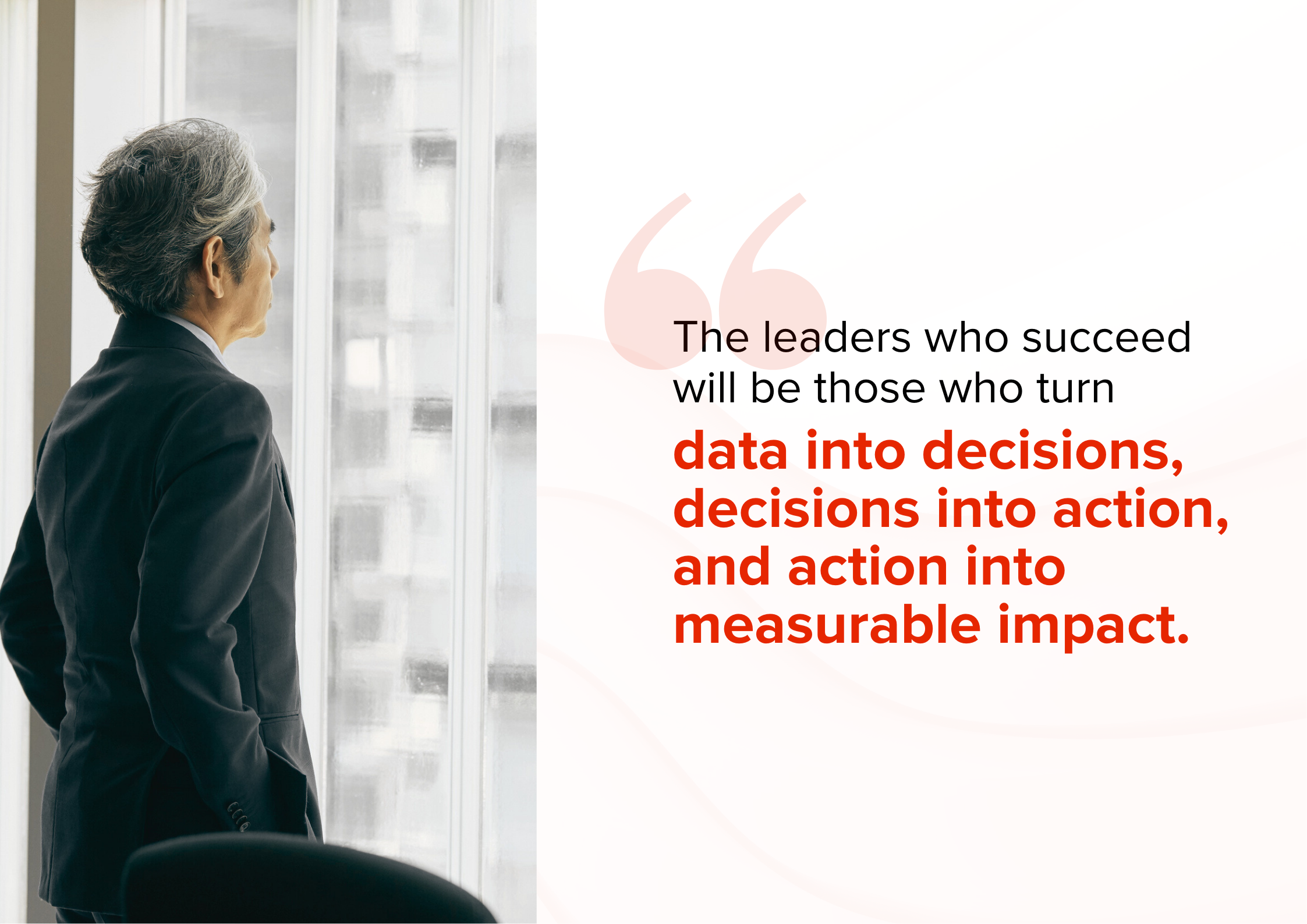
Business leadership in 2026 will be defined by clarity, speed, execution discipline, and a relentless focus on value. In a tougher, more volatile environment, the leaders who succeed will be those who turn data into decisions, decisions into action, and action into measurable impact.

